
A Modern Perspective on a Timeless Choice
Jewellery has always been so much more than an accessory. It carries meaning, reflects identity, and becomes part of everyday life in a quiet and deeply personal way. For modern wearers, balancing demanding careers, fitness routines, family life, and travel, jewellery needs to do far more than simply sparkle. It needs to endure.
This becomes especially important when choosing between platinum and white gold. At first glance, the metals appear remarkably similar. Both are elegant, cool-toned, and widely used in engagement rings and fine jewellery. However, when we look beneath the surface, they behave very differently over time.
While both Platinum and 18K White Gold are beautiful metals, Platinum is naturally white and exceptionally durable, whereas White Gold requires rhodium plating every 12–18 months to maintain its bright finish.
For active jewellery wearers, the decision becomes less about what looks better today and more about which one will continue to perform exceptionally for years to come.
At Mark Solomon Jewellers, our team of highly trained designers encourage our clients to look beyond what the eye can see and understand the craftsmanship and materials behind every design. This guide explores both the technical and practical differences between platinum and white gold, helping you to choose with confidence.
What is Platinum and White Gold? A Technical Foundation
Before understanding the long-term behaviour of each metal, we will first have to understand how each one is made.
Platinum: Purity, Rarity, and Natural Beauty
Platinum is one of the rarest precious metals in the world and is typically used in jewellery at exceptionally high purity levels, usually around 95% pure (Pt950).
Core properties of platinum:
• Naturally white, meaning no plating is required
• Highly resistant to corrosion and tarnish
• Extremely dense, giving it a substantial feel
• Hypoallergenic, making it ideal for continuous wear
Because of its purity, platinum retains both its colour and structural integrity over time. It is often considered the metal of choice for heirloom-quality jewellery.
White Gold: Engineered for Brightness and Versatility
White gold is not naturally white. It is created by mixing pure gold with white alloys such as palladium or silver, then coated with rhodium plating to achieve a bright white finish.
Typical white gold compositions:
• 18ct white gold – 75% gold
• 14ct white gold – 58.5% gold
Key characteristics:
• Bright, reflective finish due to rhodium plating
• Slightly warmer tone beneath the surface
• Requires ongoing maintenance to maintain colour
White gold is an engineered solution that balances beauty and affordability, making it one of the most popular jewellery metals worldwide.
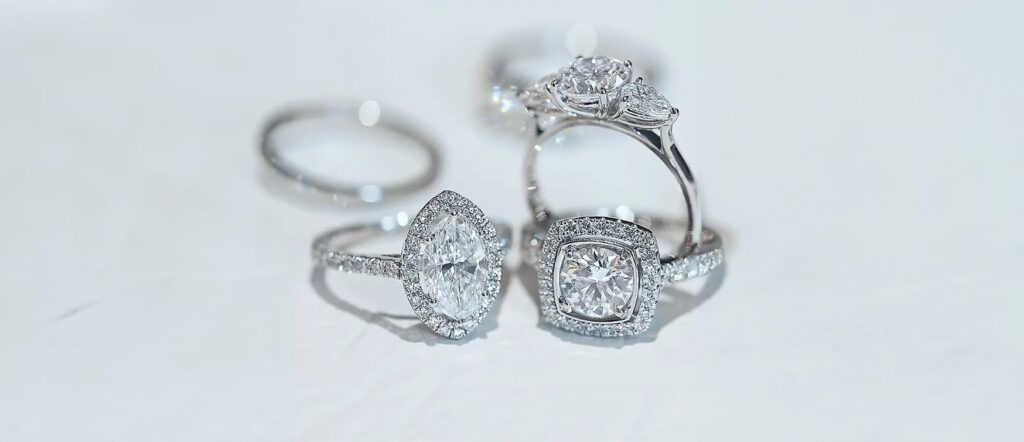
A platinum round and pear trilogy ring, an 18ct white gold marquise halo ring,
and an 18ct white gold cushion-shaped halo ring with a round brilliant cut diamond.
Durability for Active Lifestyles
For the modern wearer, their jewellery often has to accompany them through workdays, gym sessions, adventures, and everyday routines. Durability, therefore, becomes essential.
Platinum and the Mohs Scale of Hardness
On the Mohs scale of hardness, platinum is technically softer than many white gold alloys. However, hardness alone does not determine durability.
Platinum, ideal for the active wearer:
• When scratched, platinum displaces rather than loses metal
• The overall structure of the ring will remain intact for decades
• Gemstone settings remain incredibly secure and stable
This means that even with daily wear, platinum maintains its integrity, making it especially well-suited to engagement rings and jewellery worn daily.
White Gold: Strength with Considerations
White gold is generally harder than platinum, which gives it strong initial scratch resistance.
However, over time:
• The metal gradually wears away through daily wear
• Frequent polishing can slowly reduce metal thickness
• Settings may require maintenance after many years of wear
For the client living an active lifestyle, this could mean more frequent servicing is needed to keep the piece in optimal condition.
Maintenance: Understanding Long-Term Wear
Maintenance is one of the most important considerations when choosing between platinum and white gold.
Platinum Maintenance: Minimal and Consistent
Platinum is widely regarded as a low-maintenance metal.
Typical upkeep includes:
• Occasional polishing to restore shine
• Optional cleaning to remove built-up dirt or patina
• Routine inspections for gemstone security
One of the main benefits of platinum is its naturally white colour. Unlike gold, it never requires replating.
White Gold Maintenance: Ongoing Care
Unlike platinum, white gold requires regular maintenance to retain its bright white appearance.
Expected care includes:
• Rhodium plating every 12–18 months
• Re-polishing to remove visible scratches
• Routine checking of prongs and settings
While this level of maintenance is entirely normal, it represents an ongoing commitment of time and cost.

Hypoallergenic Properties and Skin Sensitivity
For jewellery worn every day, comfort matters just as much as appearance.
Platinum: Naturally Hypoallergenic
Due to its high purity, platinum is naturally hypoallergenic, making it very unlikely to cause allergic reactions.
It is an excellent choice for:
• Sensitive skin
• Long-term daily wear
• Engagement and wedding rings
White Gold: Alloy Considerations
Some white gold alloys, especially those containing nickel, can irritate certain individuals.
At Mark Solomon Jewellers, carefully selected alloys are used to prioritise comfort and wearability. However, platinum generally remains the safest choice for highly sensitive skin.
Appearance Over Time: How Each Metal Ages
Like all natural materials, precious metals age differently over time. Understanding how each metal evolves can help ensure your jewellery continues to suit both your lifestyle and personal preferences.
Platinum Patina: A Mark of Character
Over time, platinum develops a soft patina finish with a subtle, satin-like appearance.
Characteristics of platinum ageing include:
• Develops a refined, heirloom-like aesthetic
• Retains all its metal mass
• Can be polished back to a mirror finish if desired
Although restoring it to its original shine is possible, many wearers grow to appreciate this character that developed through wear.
White Gold’s Brightness: Maintained Through Care
White gold maintains its bright white colour through rhodium plating.
Without maintenance:
• The plating gradually fades
• A warmer undertone becomes visible
• Overall brightness softens over time
With regular replating, however, white gold can always return to its original brilliance.
Weight, Feel, and Daily Comfort
When considering the long-term use of jewellery, the way it feels becomes just as important as what you see.
Weight, Feel, and Daily Comfort
When jewellery is worn every day, the way it feels becomes just as important as how it looks:
Platinum:
• Heavier and more substantial in feel
• Often described as luxurious, smooth, and solid on the hand
White Gold:
• Lighter and more delicate in feel
• Often preferred for larger or more intricate pieces
The right choice often comes down to personal comfort and preference.
Cost vs Long-Term Value
Budget naturally plays an important role in jewellery purchases, but long-term value matters just as much.
Platinum Investment
Platinum typically offers:
• A higher upfront cost
• Greater density, meaning more metal per piece
• Lower maintenance costs over time
For many, this makes it a worthwhile long-term investment.
White Gold Investment
White gold offers:
• A more accessible initial price point
• Greater flexibility across different styles and designs
• Ongoing maintenance costs due to rhodium plating
It remains an excellent option for those balancing beauty and budget
Environmental and Ethical Responsibility
Today’s jewellery buyers are increasingly conscious of sustainability and ethical sourcing.
At Mark Solomon Jewellers:
• Metals are responsibly sourced
• Ethical supply chains are prioritised
• Craftsmanship is designed for longevity
When sourced responsibly, both platinum and white gold can form part of a thoughtful and sustainable purchase.
Making the Right Choice for Your Lifestyle
Platinum may be ideal for you if you:
• Live an active, hands-on lifestyle
• Want minimal maintenance
• Have sensitive skin
• Value long-term durability
White Gold may be ideal for you if you:
• Prefer a lighter feel
• Have a lower upfront budget
• Are comfortable with regular maintenance
• Prefer a bright, reflective finish
The Mark Solomon Jewellers Experience
At Mark Solomon Jewellers, every client journey is personal. The goal is not simply to sell jewellery, but to ensure each piece becomes a lasting part of the wearer’s life.
Clients receive guidance tailored to:
• Lifestyle habits
• Daily wear patterns
• Skin sensitivity
• Design preferences
• Long-term care expectations
This ensures that whichever metal you choose, it will suit not only your aesthetic but your lifestyle as well.
Final Thoughts: Jewellery That Moves With You
Jewellery is not static. It moves with you through everyday routines, milestones, and moments that quietly shape your life over time.
For those seeking durability and longevity, platinum offers resilience, security, and permanence. For those drawn to brightness and versatility, white gold provides a refined and timeless alternative.
With expert guidance from Mark Solomon Jewellers, choosing the right metal becomes more than a purchase. It becomes an investment in something designed to last, evolve, and remain meaningful for years to come.
Because the right metal doesn’t just hold a gemstone. It supports a lifetime of memories.


