

A bespoke engagement ring is more than a beautiful diamond in a setting. It’s a piece designed to tell your story, your way.
At Mark Solomon Jewellers in Cape Town, we carefully develop each custom engagement ring from the first consultation through natural diamond selection, 3D CAD design, master goldsmithing, and setting.
For couples searching for a custom engagement ring designer in Cape Town, luxury jewellery in the Western Cape, or where to buy an engagement ring in Sea Point, the real question is:
What makes a ring truly yours?
Not only should it look exceptional, feel perfect on the hand, and showcase its diamond, but it should stand the test of everyday life. Most importantly, it should carry meaning that no mass-produced ring ever could.
This guide takes you inside the bespoke process, from choosing the right natural diamond to creating a finished ring with character, precision and African heritage.
What Is a Custom Engagement Ring?
A custom engagement ring is designed specifically around an individual’s requirements and taste, without necessarily meaning that every component must be invented from scratch.
While some clients arrive with a specific concept in mind, others simply bring along designs they might like. Some know the cut of diamond and metal type they prefer but need guidance on what setting would best suit their vision. And others want to incorporate an element of their family history, cultural heritage or South African identity into a contemporary piece.
All of these are valid starting points.
The role of a skilled jewellery designer is to take those ideas and translate them into a ring that can be manufactured, worn comfortably and maintained for decades.
This distinction is important; a beautiful drawing is not going to necessarily translate to a beautiful and practical piece of jewellery.
A ring can look impressive from above but have inadequate structural support underneath the centre diamond. A setting can appear delicate and elegant while being unsuitable for someone who uses their hands extensively every day. A design can contain beautiful details but become visually crowded once all of the elements are introduced.
Bespoke jewellery, therefore, sits at the intersection of art, engineering and craftsmanship.
That is what makes the process so rewarding.

This breathtaking three-stone ring was designed to
highlight the trio of brilliant pear-cut diamonds.
Why Choose a Custom Engagement Ring in Cape Town?
Cape Town has a distinctive relationship with jewellery.
It is a city where contemporary design exists alongside centuries of African cultural heritage, natural landscapes, mineral wealth and a strong tradition of craftsmanship. For someone looking for an engagement ring that feels personal rather than generic, that environment provides an extraordinary source of inspiration.
But local design is about more than putting a familiar South African symbol onto a ring. The strongest African heritage jewellery designs begin with a deeper question:
What story are we trying to express?
Whether that is a connection to a particular region, your family’s heritage, the significance of a texture, pattern, tradition, or landscape, or simply the desire to create a ring that feels connected to South Africa without looking like a souvenir.
A sophisticated heritage-inspired engagement ring should be able to stand on its own as exceptional jewellery. The cultural reference should enrich the design rather than overwhelm it.
At Mark Solomon Jewellers, custom design provides the opportunity to explore realistic ideas with precision, creating jewellery that can feel distinctly African while remaining timeless, wearable and contemporary.
The Mark Solomon Approach: Natural Diamonds First
One of the defining characteristics of a Mark Solomon engagement ring is the exclusive use of natural diamonds.
This matters because the diamond is not simply an accessory added to a finished setting. In a properly designed bespoke engagement ring, the diamond and the setting should be considered together from the beginning.
Natural diamonds are formed naturally within the Earth over immense periods of time. Every stone has its own combination of proportions, inclusions, colour characteristics and optical behaviour. Two diamonds can have the same carat weight and certification grade yet look noticeably different once viewed in person, especially under magnification.
This is why diamond selection should not be reduced to a spreadsheet. Although the certificate provides important information, it’s only part of the decision. A knowledgeable jeweller considers how the diamond looks, how it performs in light, how its proportions interact with its shape and how it will ultimately sit within the proposed setting.
For a custom ring, this becomes particularly important because the setting can be designed around the individual characteristics of the chosen stone.
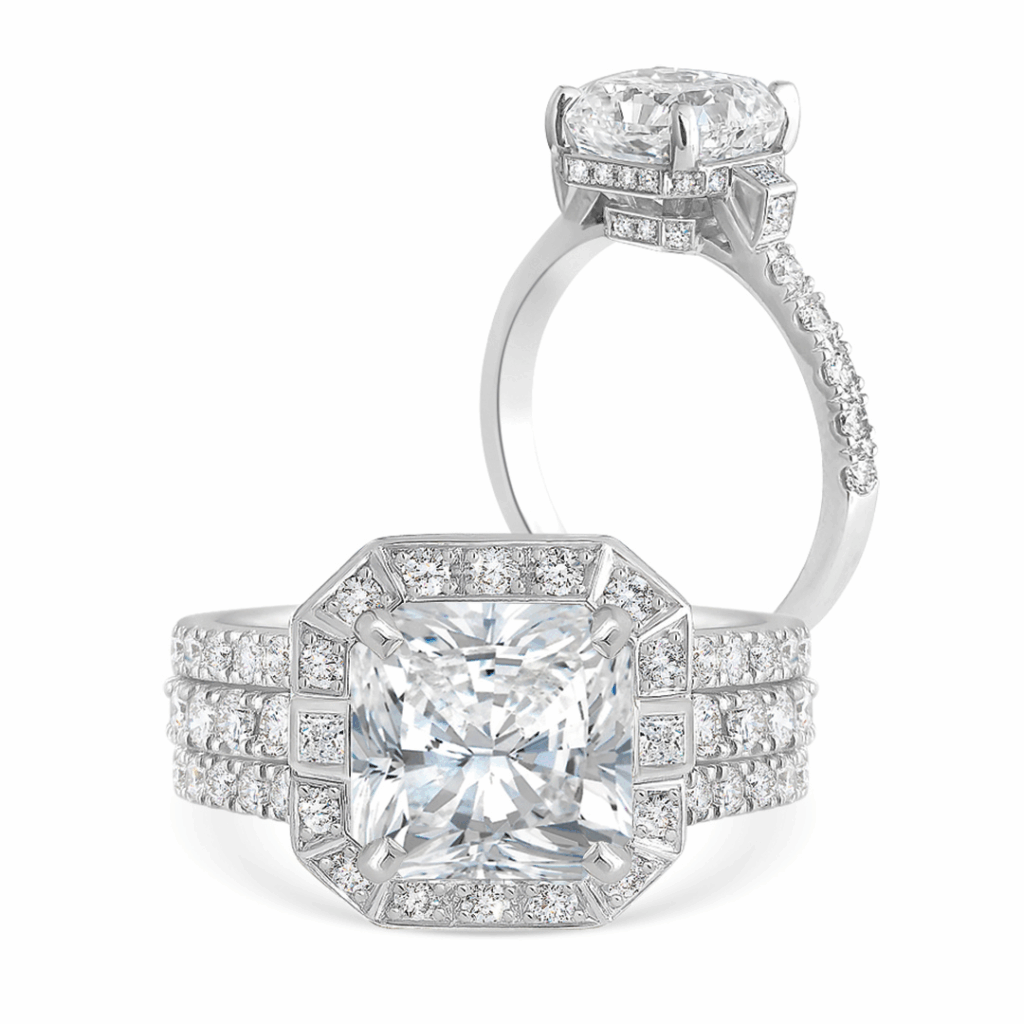
This one-of-a-kind ring can be worn with or without its diamond halo.
How Much Does a Custom Engagement Ring Cost in Cape Town?
One of the first questions most couples understandably ask is:
“How much should I budget for a custom engagement ring?”
At Mark Solomon Jewellers, engagement rings start from approximately R25,000, with the final price determined by the natural diamond, metal, design complexity and level of craftsmanship involved.
There is no meaningful single price for “a custom engagement ring” because bespoke jewellery is not one fixed product. A simple ring featuring a smaller natural diamond may have a relatively straightforward manufacturing process. A more elaborate design may involve a larger centre diamond, multiple stones, intricate pavé setting, specialised structural requirements, platinum construction, sculptural detailing or personalised heritage elements.
Rather than viewing customisation as an automatic premium, it is more useful to understand what you are paying for. The cost can be influenced by:
- The natural diamond’s carat weight
- Diamond shape
- Cut quality and proportions
- Colour and clarity
- The overall diamond specification
- The amount and type of precious metal
- Platinum versus gold
- Number of additional diamonds
- Setting complexity
- Hand-finishing requirements
- Engraving or personalised details
- Structural engineering
- Production time and craftsmanship
The advantage of beginning with a consultation is that the budget can be allocated intelligently.
Instead of deciding that every element must be the highest possible specification, at Mark Solomon Jewellers, our designers can help determine which characteristics will make the greatest visible and practical difference while remaining budget-friendly.
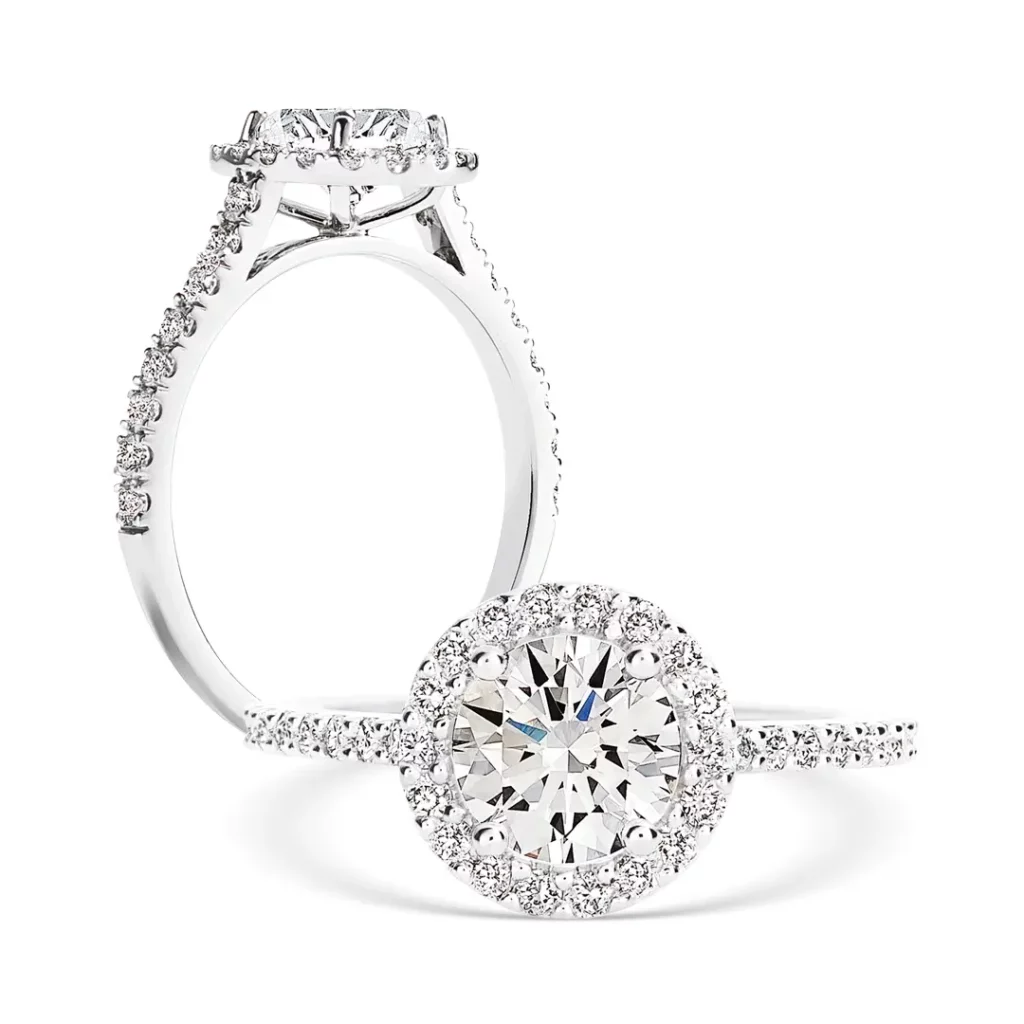
A dual view of a round brilliant cut diamond halo ring,
showcasing its sparkling halo setting and pavé diamond band from the front and side.
The Custom Engagement Ring Process: From Idea to Finished Ring
A bespoke engagement ring typically takes around 3–6 weeks to make, although the exact timeframe can vary depending on the complexity of the design, diamond availability and production requirements.
The journey can be divided into four principal stages:
1. Initial Consultation
2. Natural Diamond Selection
3. 3D Design and Prototyping
4. Hand-Finishing and Final Quality Control
Each stage has a specific purpose.
1. Initial Consultation: Turning an Idea Into a Design Direction
Every custom ring begins with a conversation. This may sound simple, but the consultation is one of the most important stages of the entire process. This is where the designer gets to understand not only what the client wants but who they are. It creates the framework for the entire process that follows.
Bring Inspiration, Even If You Don’t Know What You Want
Clients often worry that they need to arrive with a fully developed concept. This is not true. Photographs, sketches, family jewellery, architectural references, fabric patterns, pieces of African art, landscapes or even photographs from everyday life can all provide useful inspiration.
Lifestyle Should Influence the Design
One of the biggest misconceptions people have about engagement rings is that if it looks pretty, it will feel right. Although there’s nothing wrong with wanting a beautiful ring, comfort should never be considered an afterthought. When it comes to a piece of jewellery that will be worn for many years to come, lifestyle plays the utmost important role.
Someone who rarely removes their jewellery may need a different setting from someone who takes their ring off for most activities.
There is no doubt that for someone with an active lifestyle a lower profile setting might be the better option, or that someone who loves a statement piece would consider a raised centre stone. But the first prize would be to get a ring in your preferred style that matches your lifestyle without compromising on any aesthetic value.
This is where bespoke jewellery offers a major advantage. The ring can be designed around the wearer rather than asking the wearer to adapt to the ring.
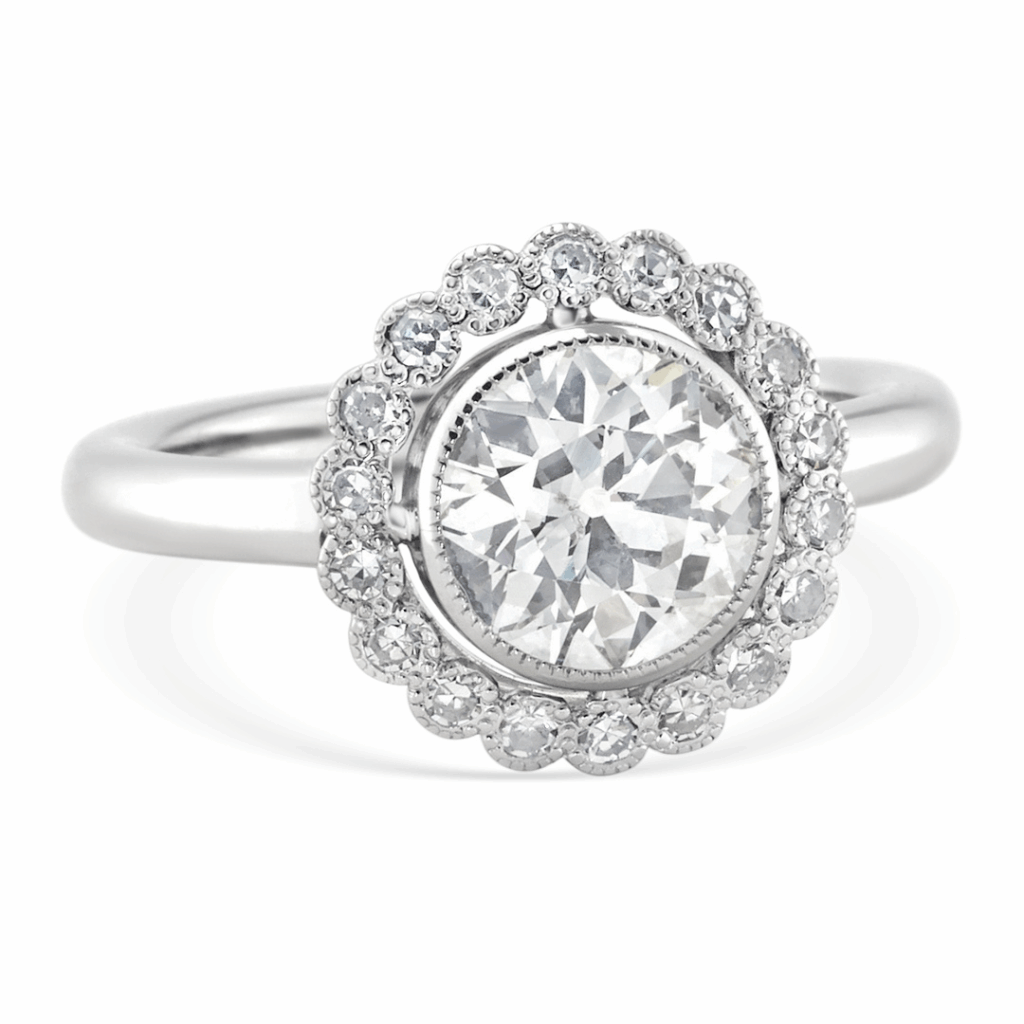
The bezel settings of this antique-style diamond ring
will protect the stones more efficiently than prongs.
2. Natural Diamond Selection: Finding the Stone That Belongs in the Design
Once the design direction is understood, attention turns to the diamond.
Mark Solomon Jewellers works exclusively with natural diamonds, and diamond selection is approached as an individual process rather than simply choosing the highest grades available.
The familiar 4Cs: cut, colour, clarity and carat remain important, but they should be understood in context.
Cut
Cut is one of the most important considerations when evaluating a diamond’s visual performance. It determines how effectively the diamond interacts with light.
A beautifully proportioned diamond can appear lively, bright and dynamic, while a poorly proportioned stone may look less impressive despite having an attractive certificate.
For engagement rings, the goal is not simply to buy a diamond with an impressive list of grades. The goal is to select a diamond that performs beautifully.
Clarity
Natural diamonds frequently contain internal characteristics known as inclusions. These characteristics are part of what makes natural diamonds individual.
Higher clarity grades are rarer and can command greater prices, but the practical question is often whether inclusions are visible to the unaided eye and whether they affect the diamond’s overall appearance.
The goal should be to find the appropriate balance between clarity, beauty and budget.
Carat
Carat measures weight, not simply visual size. The visible appearance of a diamond is influenced by its dimensions, shape and proportions as well as its carat weight.
This is why two diamonds of identical carat weight can have different visual presence. An experienced jeweller can help clients understand these differences rather than treating carat as the sole measurement of value.
Emerald and baguette cut diamonds provide a
contemporary look to engagement ring designs.
Diamond Shape: The Personality of the Ring
The diamond’s shape is one of the first things people notice.
- Round Brilliant
The round brilliant cut remains a classic choice and, to this day, the most popular pick for those seeking maximum traditional brilliance and an unmistakably timeless engagement ring.
- Oval
Oval diamonds combine brilliance with an elongated silhouette and can give a ring a graceful, elegant appearance.
- Cushion
Cushion shapes have a softer, romantic character and can work beautifully with vintage-inspired or contemporary settings.
- Emerald Cut
Emerald cuts are defined by their long, clean facets and sophisticated, understated appearance. They tend to emphasise clarity and the character of the diamond rather than relying purely on sparkle.
- Pear
The pear shape introduces movement and individuality, with its distinctive combination of curved and pointed ends.
- Marquise
The marquise offers an elongated, dramatic silhouette and can create a strong sense of length across the finger.
The objective is not to choose the most fashionable shape. It is to choose the shape that feels most appropriate for the story you are trying to tell.
3. 3D CAD Design and Prototyping: Where Art Meets Engineering
Once the concept and diamond have been selected, the design moves into the technical phase.
If the ring is not made entirely by hand, this is where 3D CAD (Computer-Aided Design) becomes an invaluable part of the bespoke jewellery process. CAD allows the proposed engagement ring to be modelled digitally before it is manufactured.
The design can be examined from different angles and refined before precious metal is committed to the final piece. This is much more than creating a pretty digital picture.
The CAD model can help establish:
- Overall ring proportions
- Centre stone dimensions
- Setting height
- Prong or claw placement
- Band thickness
- Diamond spacing
- Structural support
- Spacing for wedding bands
- Overall balance
- Comfort and wearability
This stage allows the client and designer to identify potential issues before manufacturing begins. Ensuring that every ring results in the perfect design.
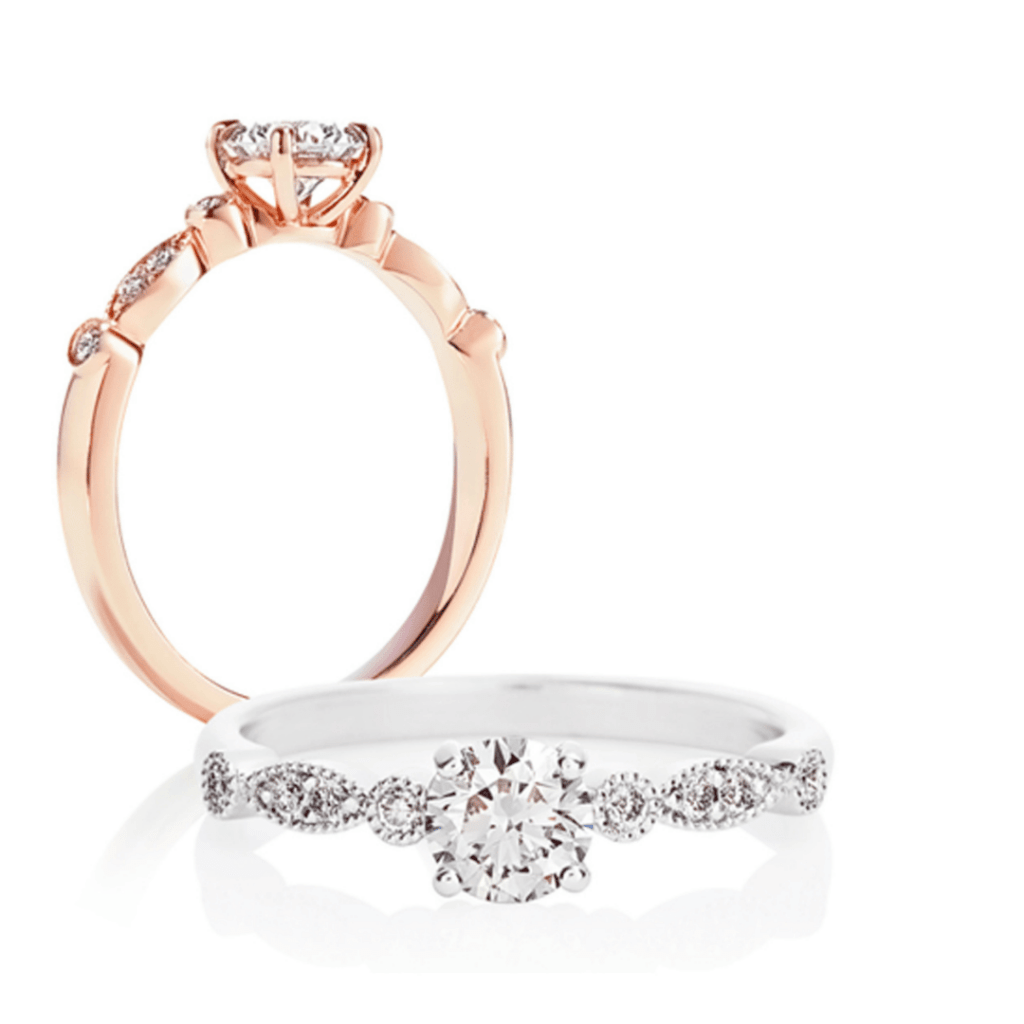
Small details can make a big difference, like the milgrain used in
these charming two-tone engagement rings in rose and white gold.
Prototyping: Seeing the Design Before It Becomes Precious Metal
Depending on the design, prototyping can provide an additional opportunity to evaluate the proportions and feel of the ring before final production.
A prototype allows questions to be answered that cannot always be resolved on a screen. These considerations become particularly valuable with highly individual designs. Bespoke jewellery should not simply be designed to photograph well. It should be designed to live on the body.
African Heritage Design: Creating Meaning Without Losing Sophistication
One of the most exciting aspects of bespoke jewellery is the ability to incorporate African heritage into contemporary design. Africa contains an extraordinary diversity of artistic traditions, patterns, materials, histories and visual languages.
For a Cape Town jeweller, this creates enormous creative potential.
It’s important to understand that there is a massive difference between meaningful cultural reference and simply applying generic “African” patterns to a piece of jewellery. The strongest designs begin with a specific story and a good designer who knows how to combine your views and ideas to create sophisticated results.
This can become increasingly difficult when trying to translate a pattern into the much smaller scale that jewellery operates on. A pattern that looks beautiful in fabric or architecture may become visually crowded when reduced to a few millimetres of precious metal.
The designer therefore must interpret the source rather than simply reproduce it. The result can be recognisable in its inspiration while still functioning as elegant jewellery.
This is where CAD and hand craftsmanship complement one another. Technology allows the geometry to be tested, while craftsmanship gives the final piece its human character.
Respect and Authenticity in Heritage-Inspired Jewellery
African heritage does not refer to merely one single aesthetic. The continent encompasses enormous cultural and artistic diversity, and symbols can have meanings that are specific to particular communities, histories or traditions.
For this reason, thoughtful heritage-inspired jewellery should avoid treating African culture as a collection of generic decorative motifs. Where a client wishes to incorporate a specific cultural symbol or tradition, understanding its origin and significance is important.
The goal is not simply to make a ring “look African”. The goal is to create jewellery with meaning, context and authenticity. This is one of the areas where a private consultation becomes particularly valuable.
A designer can help distinguish between a visual reference that works beautifully as inspiration and a symbol whose meaning requires greater consideration.
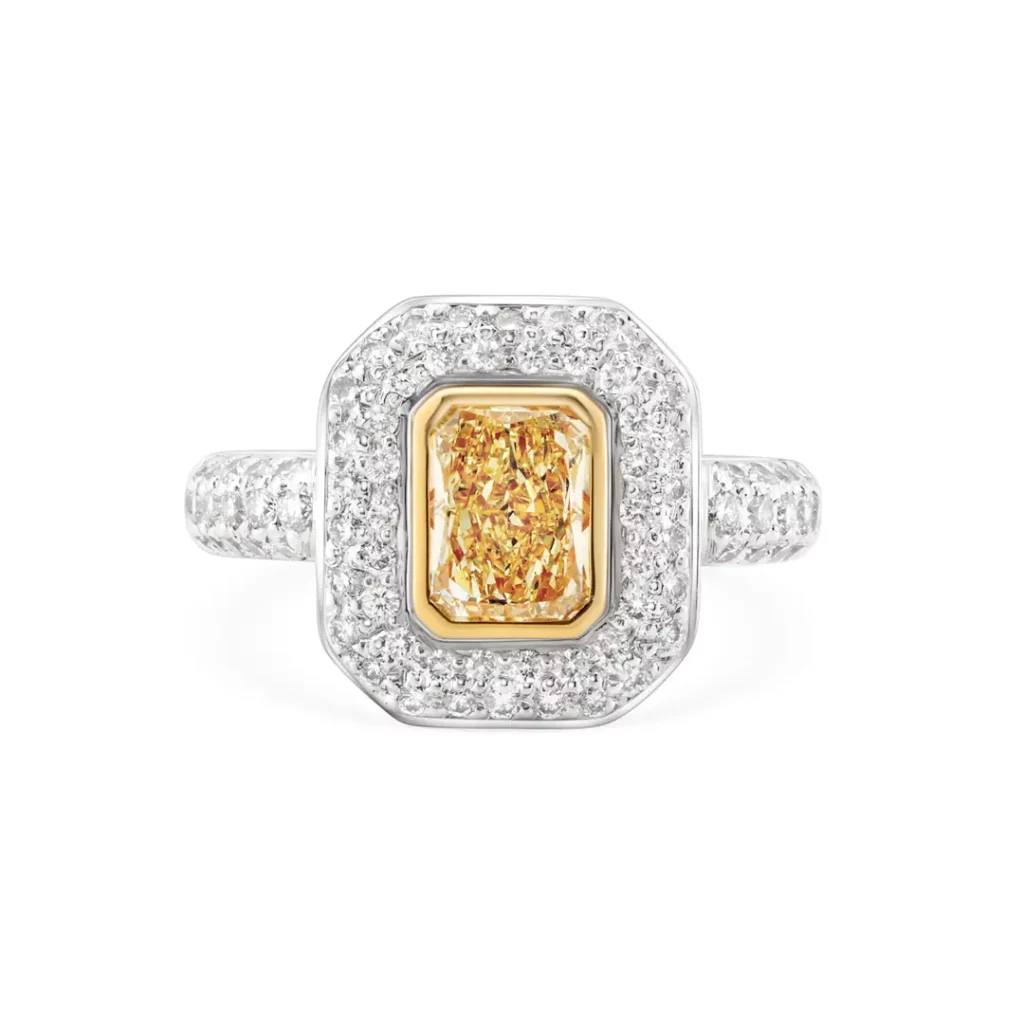
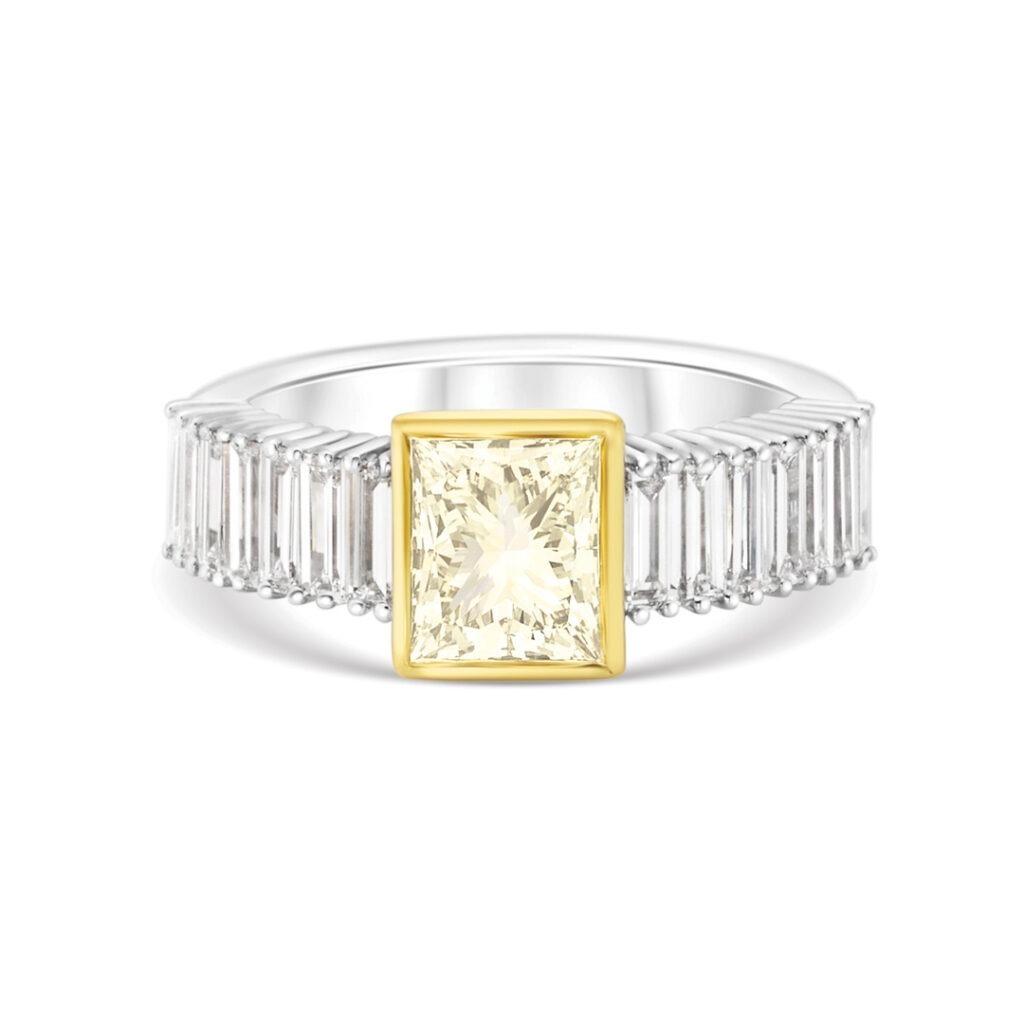
Yellow diamonds add the perfect amount of colour
and sophistication to an engagement ring.
4. Hand-Finishing: Where the Human Element Becomes Visible
Once the design has been approved and manufactured, the ring enters one of its most important stages: finishing.
This is where the skill of the goldsmith and setter becomes visible.
Although machines can create extraordinary precision, they cannot replace the judgement of an experienced craftsperson. The ring must be carefully examined, cleaned, finished and prepared for setting. Edges need to be refined, surfaces need to be polished, transitions between components need to be smooth, and the setting needs to be inspected.
It is in these final details that precision becomes craftsmanship, transforming a technically accurate design into a piece of jewellery with character, refinement and permanence.
A Ring Designed to Be Yours
A bespoke engagement ring is ultimately about far more than choosing a beautiful diamond or creating an impressive design. It is about bringing together personal meaning, lifestyle, design, engineering and craftsmanship to create something that is genuinely unique to the wearer.
From the first consultation and selection of a natural diamond, through 3D CAD design, prototyping and the final stages of hand-finishing, every decision contributes to the finished piece. The result should not only look exceptional, but feel right on the hand, perform beautifully and stand the test of everyday life.
For couples looking to create something with a deeper connection to Cape Town and African heritage, the bespoke process offers another layer of possibility. Meaningful references, personal stories and cultural influences can be interpreted into contemporary jewellery without compromising elegance or wearability.
This is what makes bespoke jewellery so special. You are not simply choosing a ring from a collection. You are part of the process of creating one.
And when the design, diamond and craftsmanship come together, the finished ring becomes more than an engagement ring. It becomes a piece of jewellery with a story that belongs entirely to you.


