

A Brief History of Engagement Rings
The history of engagement rings is both fascinating and captivating and may actually surprise you when you learn more about it.
We all know engagement rings as the classic symbols of love and commitment they are today. These precious pieces of jewellery had their debut in Ancient Rome a good many centuries ago. Roman women wore the first bone and flint rings and then copper, silver, and gold in the 2nd Century.
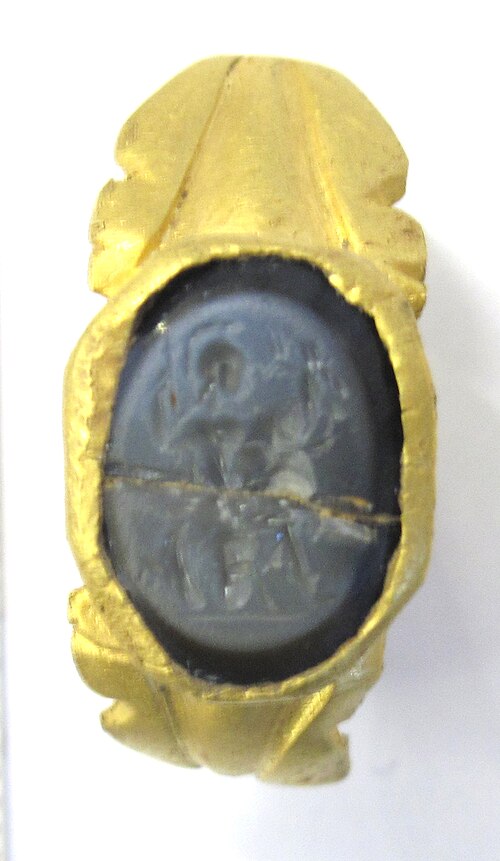
Although the ancient Egyptians are sometimes credited with inventing the engagement ring, and the ancient Greeks with adopting the tradition, the history of the engagement ring can only be reliably traced as far back as ancient Rome.
The Ancient Romans were very similar to the Greeks in matters of jewellery and marriage. They had a preference for gold dressed in colourful gemstones and glass. The Roman bride-to-be was given two rings, a gold one which she wore in public, and one made of iron, which she wore at home while attending to household duties.
The ancient Greeks and Romans held a romantic belief regarding betrothal rings, placing them on the fourth finger of the left hand because they believed a vein—the ‘vena amoris’ or ‘vein of love’—connected that finger directly to the heart.
The history of engagement rings in Ancient Egyptian culture had a wonderfully romantic interpretation. The shape of the ring itself, the circle, symbolised eternal life, while the opening in the centre was believed to be a portal to a future between two newlyweds.
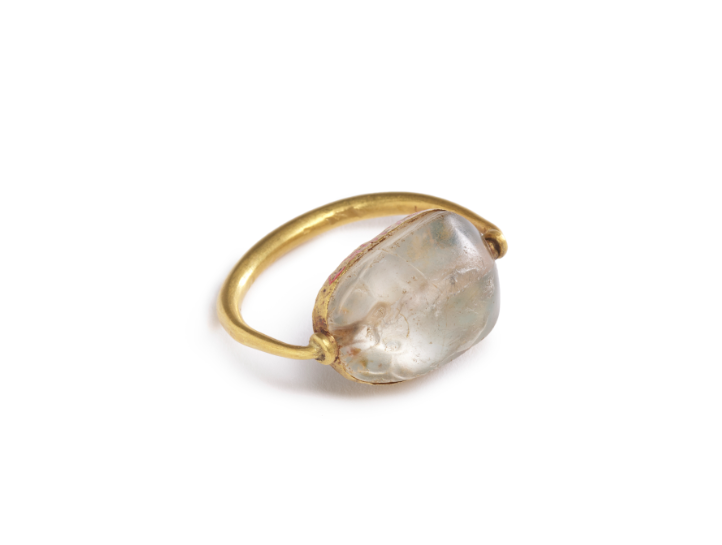
Walters Art Museum: Gift of the children of Robert Garrett, 1964
In Ancient India, gold was the most adored form of jewellery. The love for jewellery in India is still prominent today, but back in Ancient India, it most likely stemmed from the culture’s belief in the mystical qualities of certain pieces and the thought that they could protect the wearer from evil.
A SYMBOL OF MARRIAGE
While ancient cultures used circles of metal and natural materials to symbolise devotion, it was in 860 A.D. that Pope Nicholas I gave the engagement ring official papal backing, declaring that a gold betrothal ring represented a suitor’s solemn financial and marital intent.
Renaissance
The first well-documented use of a diamond ring to signify engagement was by Archduke Maximilian of Austria at the imperial court in Vienna in 1477, upon his betrothal to Mary of Burgundy. According to the GIA, the ring featured long and narrow diamonds mounted in the shape of an “M.”
This, in turn, influenced those of higher social class and significant wealth to give diamond rings to their loved ones.
Enlightenment
During the Age of Enlightenment, both gimmal rings and posy rings were popular, although the latter was more often used as an expression of sentiment rather than to indicate a formal engagement.
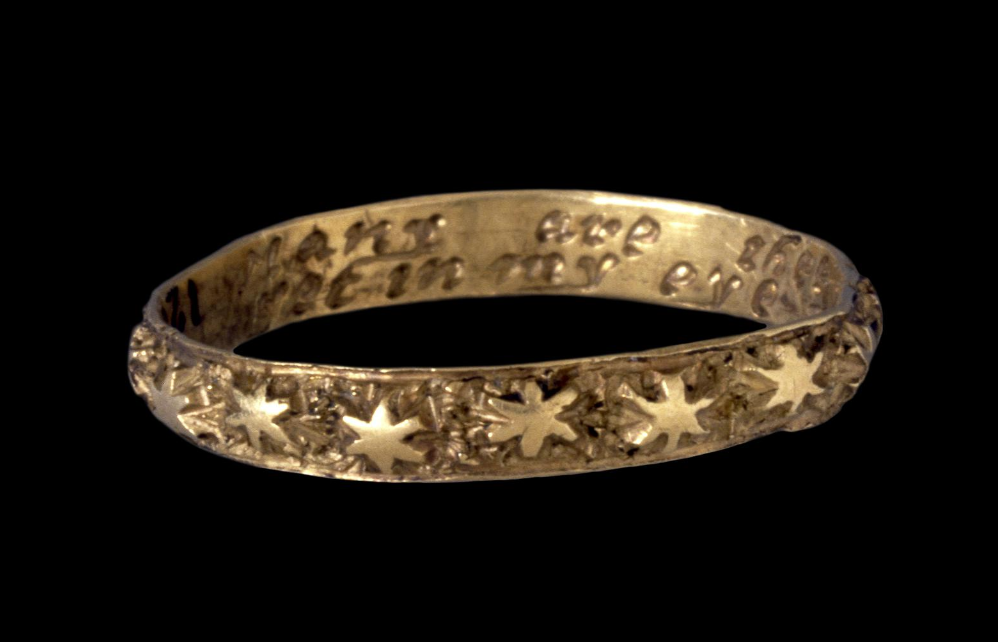
A Posy Ring with geometric stars on the outside and an inscription on the inside, translating to “Accept this willingly”.
The Victorian Era
In South Africa, the first diamond (the Eureka) was discovered in 1866 and officially identified in 1867. However, large-scale mining only began after 1870 with the discovery of the rich diamond pipes in Kimberley. By the late 1870s and 1880s, annual output surged past one million carats, bringing diamond engagement rings within reach of the broader public. As production increased, those of lesser means were able to join in on this movement. However, diamond engagement rings were seen for a long time as the domain of the nobility and aristocracy, and tradition often favoured simpler engagement bands.
The famous slogan, “A Diamond Is Forever”, coined by Frances Gerety, ignited the popularity of engagement rings and altered the history of engagement rings dramatically. The slogan persuaded the consumer that an engagement ring is indispensable, and that a diamond is the only acceptable stone for an engagement ring.
The sales of diamonds in the United States rose from $23 million to $2.1 billion between 1939 and 1979. Diamond engagement rings skyrocketed in popularity with the help of glamorous Hollywood stars like Grace Kelly and Elizabeth Taylor.

Grace Kelly had two engagement rings – a “temporary” engagement ring of diamonds and rubies while her real engagement ring was being made. Princess Grace’s engagement ring was a 10.47 carat emerald-cut diamond set in platinum. She wore it while filming “High Society”.
21st Century
Today, diamonds continue to symbolise love for hundreds of millions of couples around the world. Romantic love is universal to all cultures and times, but the expressions of love are different in different cultures – some are explicit, and others are implicitly understood without words and big gestures.
Diamonds as symbols of love address both the explicit and the implicit expressions of love through the choice of designs, occasions, and presentations.
The expressions of modern romantic love are manifold. Engagement and marriage are no longer the only ways to show romantic love. It is increasingly expressed in relationships before and outside marriage, and in celebrations during married life.


