

Are you considering choosing a Cape diamond for your engagement ring or perhaps wondering what Cape diamonds really are? Read on to find out more about these distinctive diamonds and how they could work for you.
What are Cape diamonds?
The term Cape diamond refers to diamonds within a rather broad light yellow scale, ranging from barely perceptible to typically warmer hues. While most of us could only dream of owning a pure white diamond (with a substantial carat weight, of course), Cape diamonds possess a particular warmth and luxury extremely unique to them. These diamonds sparkle with as much radiance as their pure, icy white counterparts and are desirable due to their lively, sunlit tones and overall affordability per carat. When choosing a Cape diamond, keep in mind that just as with whiter diamonds, cut and clarity will still influence the quality and value of your diamond, and these factors should be carefully considered and discussed with your jeweller or qualified gemologist.
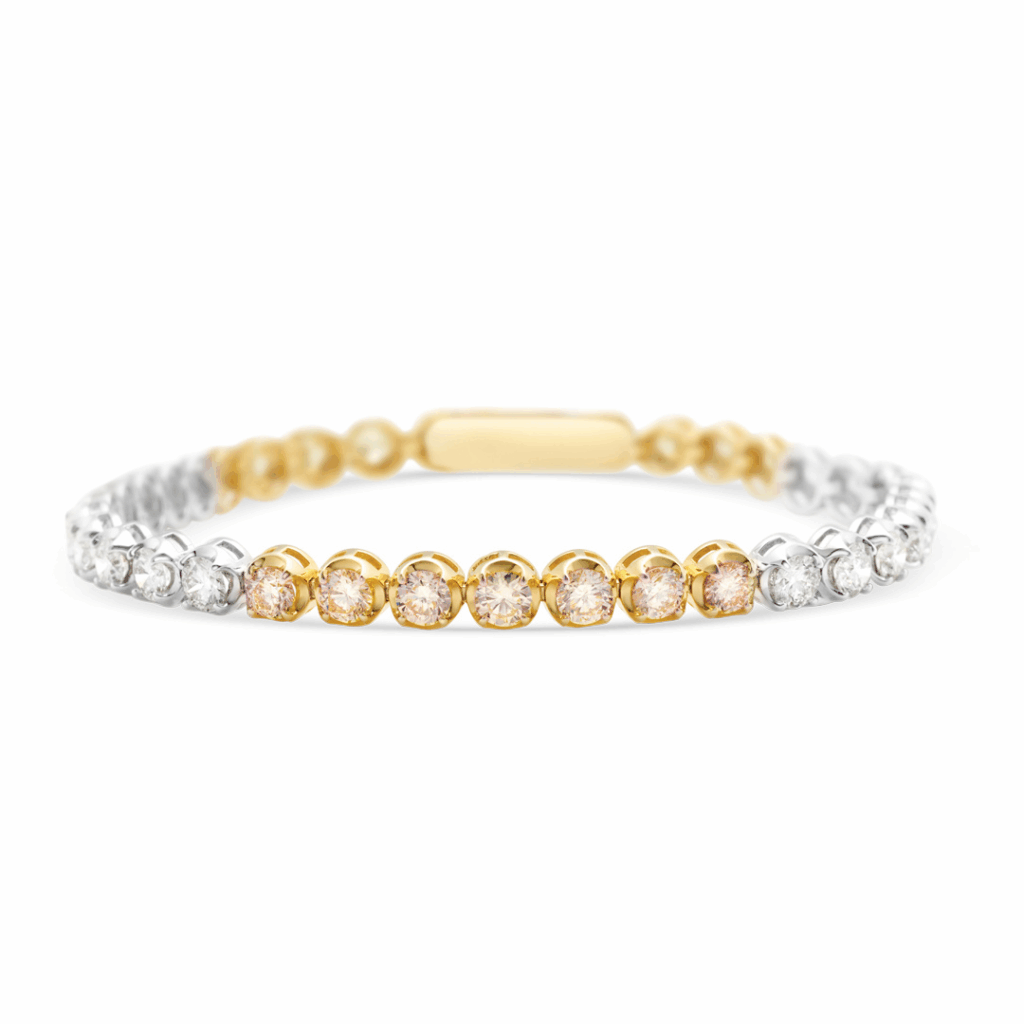
A timeless tennis bracelet with diamonds in a variety of hues.
The History of Cape Diamonds & Other Old World Terms
Before the GIA developed the diamond colour and clarity grading scale, the term Cape diamond referred to a diamond’s place of origin. Diamonds from Brazil and India were whiter in comparison to Capes, and so the term Cape came to be synonymous with the diamonds that had more yellow saturation, the majority of which came from the British Cape Colony in South Africa. However, after the GIA introduced and standardised the D-to-Z diamond colour grading scale in the early 1950s, the designation was used exclusively to reference the colour of a diamond falling within the light yellow scale, regardless of its geographic origin.
More quixotic terms for diamond terminology were used prior to the industry language being standardised:
Jager and River Diamonds (Blue White – Finest White)
The terms Jager and River, now known as D-E diamonds, were used to refer to diamonds that appeared colourless against a white background. Jager is derived from the name of a kimberlite diamond mine, the Jagersfontein Mine, located a few kilometres outside Bloemfontein, South Africa. Jagers diamonds were famous for the faint, bluish tint they displayed, and both the Excelsior and the Reitz -two of the largest and finest diamonds ever discovered- were both mined at Jagersfontein.
The old world term River was used to refer to diamonds of exceptional colour that were found in rivers or alluvial deposits and is now occasionally used by diamond trade members when referencing D – finest white diamonds. This is because the term Jager was later replaced by River once it was discovered that the bluish tint Jager diamonds were famous for was in fact a result of fluorescence, and not a result of blue suffusion.
Top Wesselton & Wesselton Diamonds (Fine White – Commercial White)
Top Wesselton and Wesselton diamonds derived their name from the Wesselton Mine in South Africa, which became famous for producing superior quality stones in comparison to the mines in the surrounding areas. The terms Top Wesselton and Wesselton were adopted to describe colourless, fine white to white diamonds.
Top Crystal & Crystal Diamonds (Very, Very Slight – Slightly Tinted)
Although it is not known for sure, it’s thought that Top Crystal is an early trade term to designate diamond colour grades between Wesselton and Crystal in the river-to-light-yellow system. Top Crystal and Crystal correspond to I and J colour grades on the modern GIA scale. Diamonds in this group present a very subtle trace of warmth that is difficult for an untrained eye to detect when viewed face-up, making them among the most popular and value-driven choices for fine jewellery. K and L colour diamonds were historically categorised as Top Cape.
Top Cape, Silver Cape & Cape Diamonds (Light Yellowish – Yellowish)
Top Cape and Top Silver Cape were used to distinguish K-L diamonds, and while these diamonds have a notable trace of colour, they may face up (the usual position from which a mounted diamond is observed) white and while most people today categorise diamonds that fall in the M+ colour scale as Cape Diamonds, diamonds in the M+ colour range were originally referred to as Light Cape diamonds. Diamonds in the R-Z scale were simply known as Cape diamonds.
Cape diamonds do not have full yellow saturation, as this would classify them as Fancy colour diamonds. Fancy colour diamonds display lavishly rich colour saturation and are graded according to a different scale. Because of the colour saturation found in Fancy colour diamonds (colours ranging from blues, greys, pinks, reds, to yellows), they are extremely rare and can be more expensive than pure, colourless diamonds.
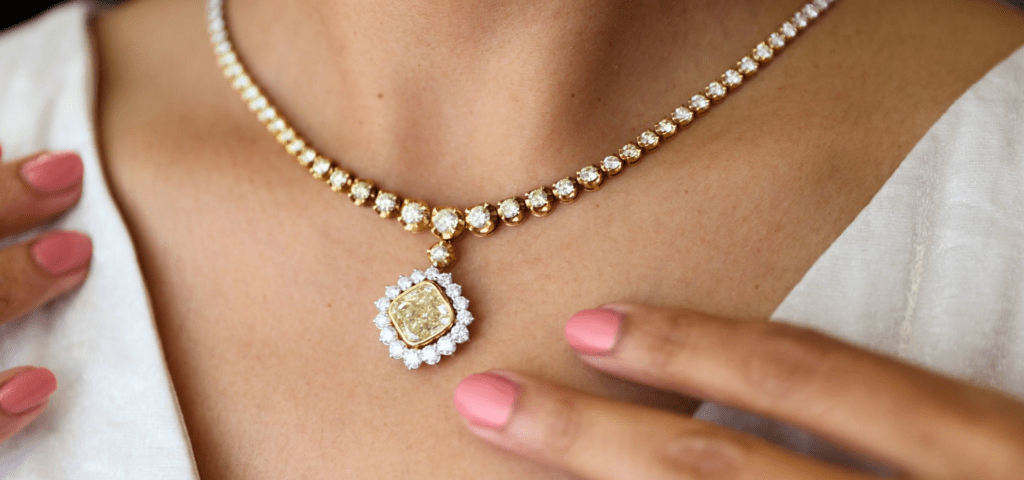
Our African Glory, a masterfully crafted, classically designed necklace, heralds a magnificent 6.16ct, internally flawless, fancy yellow cushion-cut diamond, embraced by a halo of fine white round brilliant-cut diamonds, suspended from a necklace set with meticulously selected diamonds subtly graduating from yellow to fine white (123 yellow and white diamonds = 10.66ct).
Why choose a Cape diamond?
Cape diamonds can appear soft and buttery and perfectly complement warmer precious metals like rose and yellow gold.
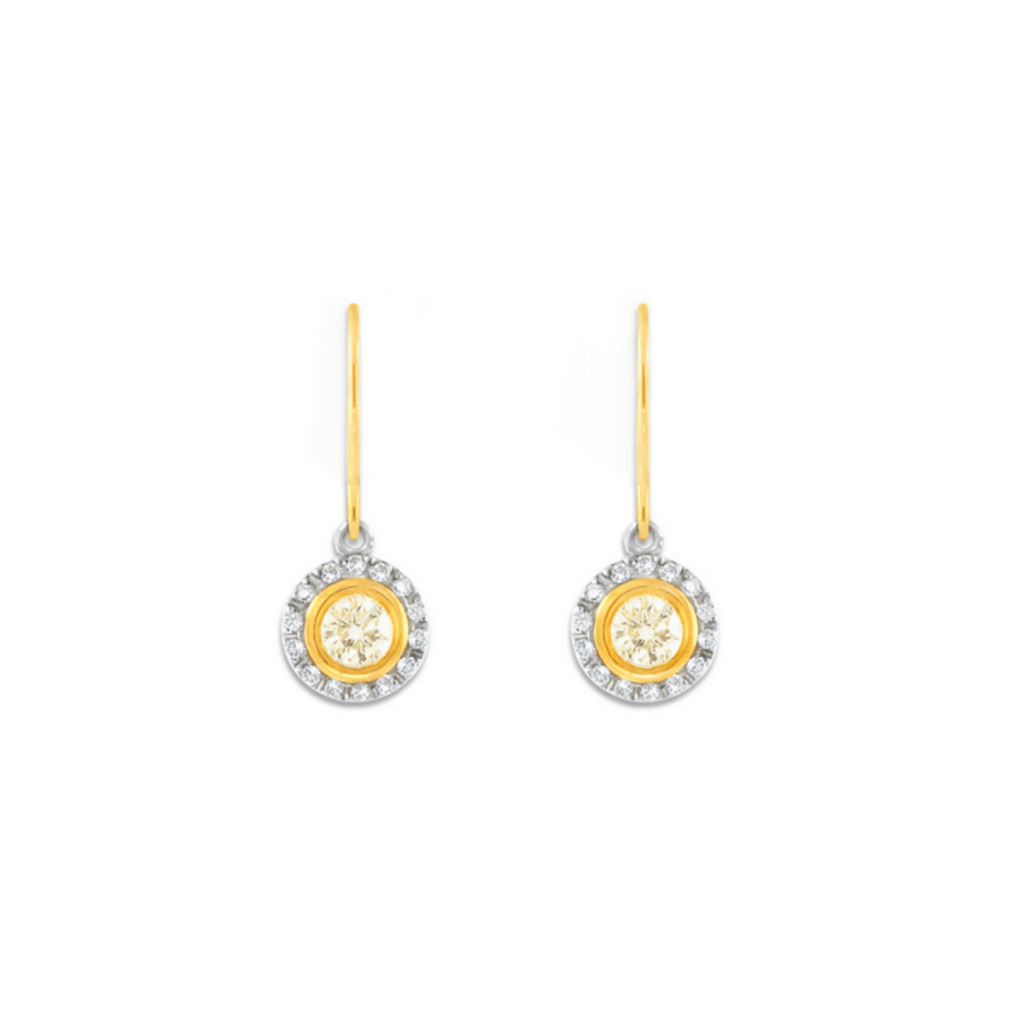
Cape and white diamond halo drop earrings.
Cape diamonds are an excellent choice for those desiring a higher carat weight at more affordable prices. Unfortunately, due to misinformation, those in the diamond market are often put off by the idea of a diamond having a “yellowish tint”, whether this is perceptible in natural lighting or not (and it’s often not). Typically, a client’s priority is to purchase the whitest diamond at the highest carat weight, but because near-colourless diamonds are exceedingly rare and extremely costly, this often has a disappointing end result.
We encourage our clients to view diamonds in person at our showroom, as there are many misconceptions around diamond colour, factors that influence colour, and the subtle differences between colour grades. We also offer our clients a unique opportunity to view their diamonds in natural daylight, revealing the true fire, brilliance, and natural beauty of the stones.
It’s important to understand that diamond colour has nothing to do with how brilliantly a diamond reflects light, and diamonds in the Cape range may face up well, especially between 0.50cts and 0.70cts. A Cape diamond with excellent cut and clarity will sparkle just as brilliantly and with as much fire as a whiter stone, perhaps even more magnificently. However, if you’re looking to purchase a Cape diamond specifically, chances are you already appreciate the lavish beauty of Capes and aren’t looking to hide the colour of your diamond, but rather actively desire the warmer sparkle this diamond has to offer.
As one of the largest and most trusted suppliers of South African diamonds, tanzanites, and other gemstones, you are likely to find any stone that your heart could possibly desire at our showroom – whether for investment purposes or with the intention of personally selecting the ideal Cape diamond for your diamond engagement ring.


